Rural & Coastal Access
Where does private property end and the right to roam begin?
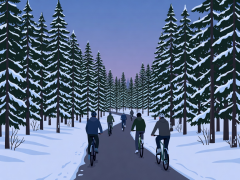
Public space in the Nordics does not stop at the edge of town pavement. Legal statutes known as Allemansrätten in Sweden, Allemannsretten in Norway, Jokamiehenoikeus (now increasingly termed Jokaisenoikeus, "everyone's right") in Finland, and Almannaréttur in Iceland codify an ancient custom: anyone may walk, ski, paddle, camp overnight, and pick wild blueberries, lingonberries, or chanterelles on uncultivated land, even if that forest is privately owned.
The rule rests on a reciprocal contract summarized in Sweden as "do not disturb, do not destroy" (inte störa, inte förstöra). Hikers must stay out of sight of private house yards (hemfridszon), leave gates as they found them, and never snap living tree branches.
Norway, Sweden & Finland: Expansive Roaming
- Overnight Camping 1–2 nights in a tent on uncultivated land at least 150m from dwellings
- Foraging Rights Wild berries, mushrooms, and fallen dry twigs belong to the finder
- Shoreline Protection Strict limits on new private docks to keep lakes and fjords walkable
- Trail Infrastructure Open wilderness huts and Norwegian Trekking Association (DNT) cabins
Denmark: High-Density Managed Access
- Forest Rules Intensive agriculture means public forests allow day access; private woods restrict hours
- Shelter Network Over 1,000 designated wooden shelters bookable for low-impact sleeping
- Coastal Guarantee The Nature Protection Act guarantees public foot access along almost all beaches
- Urban Pocket Parks Climate-adaptation cloudburst plazas that hold rainwater and skate bowls