Domestic Architecture & Habit
Interiors: Less, but Lived In
Real Nordic apartments are rarely monochrome art galleries. They hold stacks of library books, drying wool mittens, inherited birch stools, and stoneware mugs. What makes them feel uncrowded is how walls, thresholds, and light fixtures do the heavy lifting.
The First Three Meters
How does the hallway protect the rest of the home?
In North America or parts of Western Europe, front doors frequently open directly into a living room. Across the Nordic countries, building codes and climate common sense demand a dedicated vestibule or hallway—called the eteinen in Finland, hallen in Sweden, and gang in Norway and Denmark. During six months of slush, grit, and gravel spread on icy sidewalks, this transition zone acts as an airlock and a dirt trap.
Because everyone removes outdoor shoes immediately upon entering, flooring inside the main rooms can be untreated lye-washed Douglas fir, oiled oak parquet, or soft woven rag rugs (trasmatta) without getting ruined by road salt. A guest standing in wool socks experiences the room at a slower, quieter pace than someone clicking across tiles in leather soles.
01
Finland
1944 Invention
Maiju Gebhard and the Dish-Drying Cabinet
At the Finnish Work Efficiency Institute, Maiju Gebhard calculated that an average household spent nearly 30,000 hours over a lifetime wiping dishes by hand. Her solution—the astiankuivauskaappi—placed slotted wire racks inside a bottomless cupboard directly above the sink. Washed plates drip straight into the basin behind closed doors, leaving countertops completely clear.
02
Sweden
1930s–1950s Folkhemmet
Josef Frank’s Botanical Antidote to Strict Purism
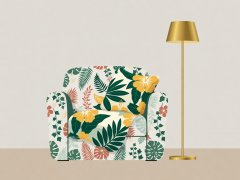
While international modernism preached chrome tubes and white walls, Vienna-born architect Josef Frank joined Stockholm’s Svenskt Tenn in 1934 and argued that standardized housing needed lively botanical prints, rounded mahogany edges, and woven rattan. Today, Swedish interiors still pair simple white-painted wainscoting with bold textiles from Jobs Handtryck or Svenskt Tenn.
03
Denmark
Optical Engineering
Poul Henningsen’s Three-Shade Glare Control
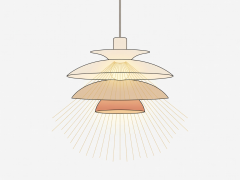
When electric bulbs replaced kerosene lamps in the 1920s, Danish writer and architect Poul Henningsen complained that harsh filaments ruined human faces and evening conversation. His logarithmic spiral shades reflect light downward and outward so the eye never sees the bare bulb. Whether a household hangs a classic PH fixture, a pleated Le Klint lantern, or a second-hand flea-market shade, the principle remains identical: illuminate the table surface, leave the ceiling in calm shadow.